
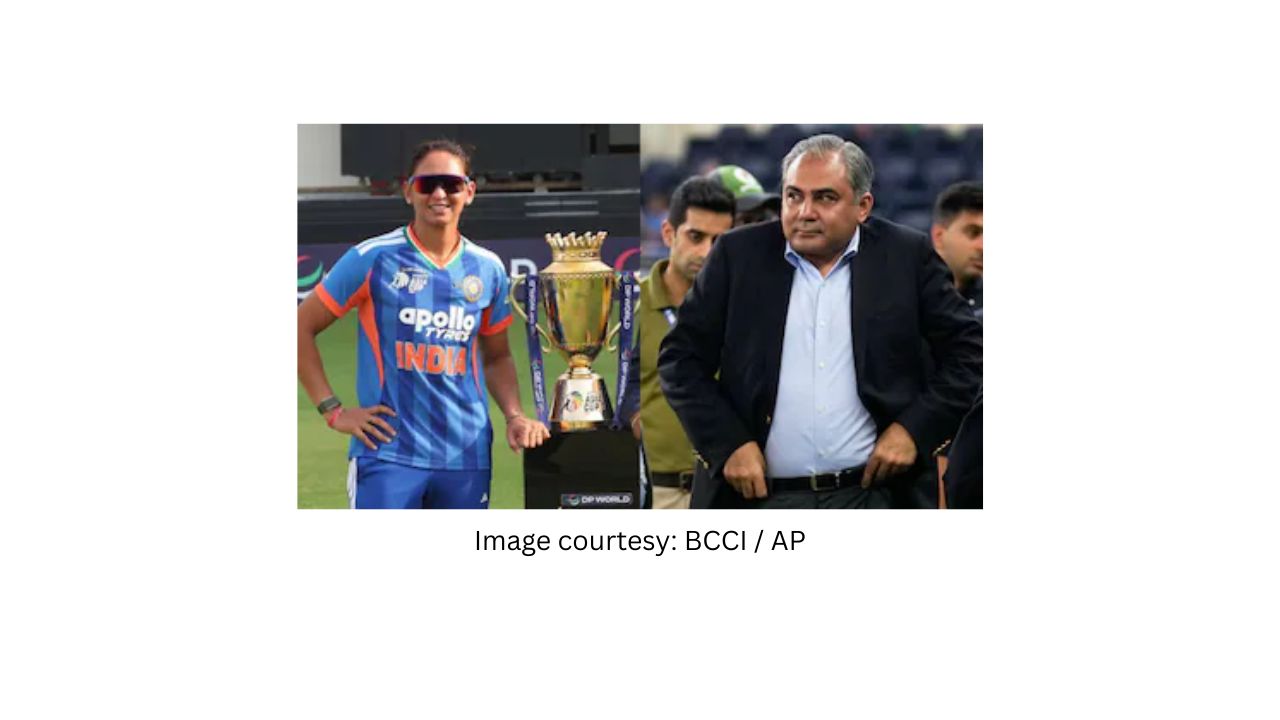
On Sunday evening, the Indian women’s cricket team beat Sri Lanka in the final of the Women’s Asia Cup 2026, winning their record-extending 8th title. But once again, the celebration was overshadowed by controversy India refused to accept the trophy from ACC president Mohsin Naqvi, who is also Pakistan’s Interior Minister and chairman of the Pakistan Cricket Board.
This wasn’t a one-off decision by the players. BCCI officials confirmed it was a board-level call the same stance India’s men’s team took last year.
Like in 2025, when Suryakumar Yadav’s men’s team refused to accept the Asia Cup trophy from Naqvi after their win, the women’s team followed the same institutional decision. BCCI secretary Devajit Saikia stated clearly that the board decided not to accept the trophy from someone who is also one of Pakistan’s senior political leaders not just a cricket administrator.
Many have praised the Indian team for standing firm on this decision, especially given Naqvi’s dual role heading the ACC while also serving in Pakistan’s government, which many see as a direct link between sport and politics that India wanted to avoid engaging with.
On the other hand, next month brings a different picture entirely. The Asian Champions Trophy hockey tournament will be held from 27 October to 5 November 2026 and this time, it’s being hosted in Punjab, India (Jalandhar and Mohali), not Pakistan. Pakistan’s hockey team has been confirmed to participate and will travel to India for the tournament, though their federation has said the final visit still depends on government clearance.
This naturally raises the question: why does cricket avoid contact while hockey doesn’t? We’ve already seen Indian and Pakistani hockey players shake hands and exchange high-fives at the FIH Pro League and the FIH Hockey World Cup earlier this year — a sharp contrast to the no-handshake stance in cricket.
To be clear on one point: there’s no official Sports Ministry rule that bans handshakes between Indian and Pakistani athletes. Hockey India has stated that players are not restricted from shaking hands or engaging in the usual courtesies of the sport. The difference comes down to each sport’s own federation and team leadership choosing their own stance — cricket’s board has taken a firmer institutional position, while hockey has chosen to keep sportsmanship separate from politics.
So the short answer to “why the difference” isn’t a rule — it’s a choice, made separately by each governing body, shaped by how directly each one wants to engage with Naqvi’s dual role as both a sports official and a sitting member of Pakistan’s government.