

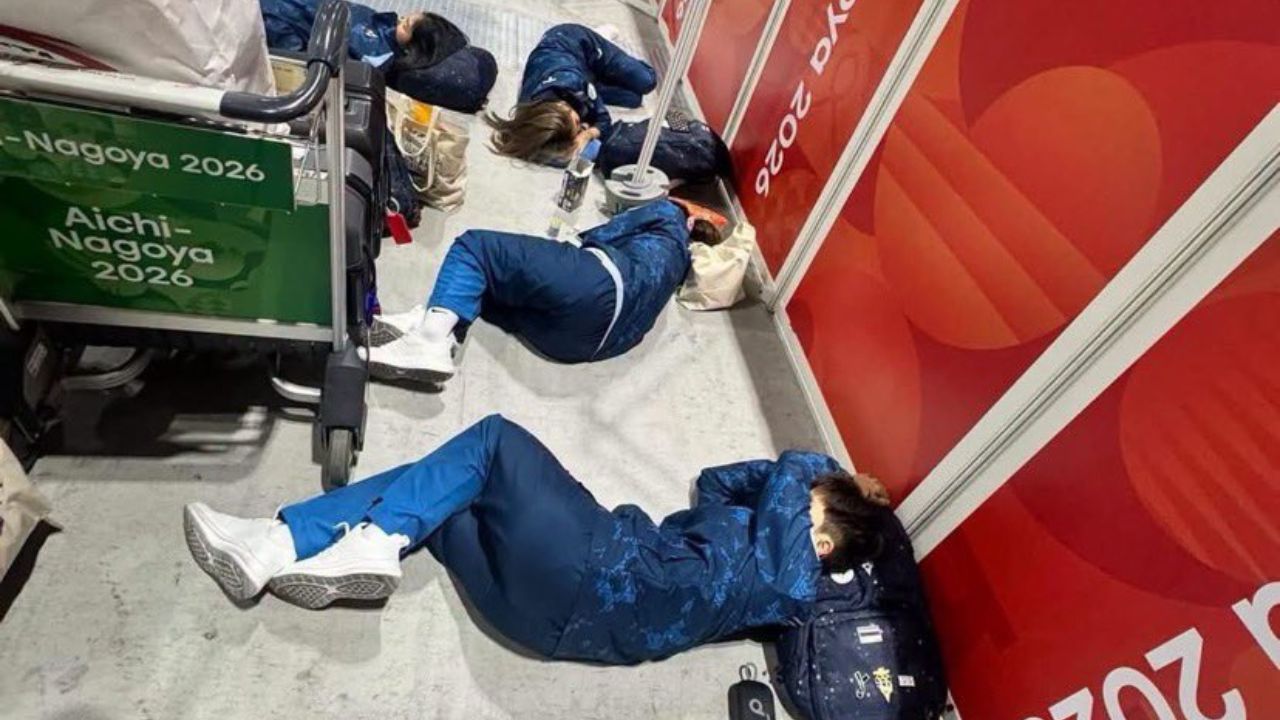
The Asian Games hasn’t even had its opening ceremony yet, and it’s already making headlines for the wrong reasons. Athletes who travelled thousands of kilometres to represent their countries are dealing with missing hotel rooms, cramped cabins, accreditation mix-ups, and in at least one case, paying out of their own pocket just to feed their horse. So what’s actually going on, why is it happening, and does it mean anything for the future of events like this? Let’s go through it properly.
So what exactly happened?
a lot of athletes arrived in Nagoya, Japan, this week and simply didn’t have anywhere to stay or ended up somewhere far worse than expected. One of the biggest problems involved India’s rowing contingent.
Indian rowers arriving at the Costa Serena cruise ship were reportedly left waiting for hours before rooms were allocated. Some athletes eventually received rooms but were asked to share them. Reports also said athletes waiting for accommodation had limited access to food while the issue was being sorted out.The problem wasn’t limited to rowing.
India’s shooting contingent also faced accommodation complications after the assigned facility was already occupied, forcing a change in arrangements. Veteran shooting coach Samaresh Jung also faced an accreditation problem that needed to be corrected.
The equestrian contingent faced another issue. Reports said riders were asked to pay for horse feed and related expenses themselves because of a shortage of available funds.These are not small inconveniences when athletes are arriving after long journeys and preparing for competition.
And India wasn’t the only country affected
This is important.The accommodation problems are not simply an Indian issue. Officials from multiple countries have raised concerns with the organisers. South Korean officials, in particular, complained about room shortages and beds that were too short for some of their basketball players. Reports have also described problems involving transportation and room allocations.
Even Japan’s own team has been looking at alternative accommodation after cases in which athletes were reportedly allocated unsuitable shared rooms.So there is a wider organisational problem here.
Why doesn’t Nagoya have a traditional Athletes’ Village?
This is where the story gets interesting.Unlike recent major multi-sport events, Aichi-Nagoya did not build a conventional, purpose-built Athletes’ Village.Instead, organisers created a mixed accommodation system.
Around 9,000 participants are staying in hotels, while others are being housed on the Costa Serena cruise ship and in temporary, container-style accommodation near Nagoya Port. Current reports put the overall number of athletes and officials at around 17,000, following an increase in participation.
The idea wasn’t completely unreasonable.Building a huge Athletes’ Village is expensive, and organisers have been trying to reduce costs while using existing infrastructure. The cruise ship and temporary accommodation were presented as alternatives to constructing a large permanent village.The problem is not necessarily the idea itself.The problem is whether the system can actually handle the number of people arriving.
Is the cheaper option actually working?
Based on what’s happened in the last few days — no, not smoothly. The organising committee itself has admitted the setup has problems and says it’s working to fix bed shortages and space issues before more athletes arrive. But “we’re working on it” days before the opening ceremony isn’t a great place to be starting from, especially when athletes are trying to rest, recover from long-haul travel, and prepare to compete at their best.
There’s a real tension here worth sitting with. Multi-sport Games are extremely expensive to host, and cities and countries have genuine reasons to be careful with the price tag — nobody wants to end up in debt over a two-week event. But there’s a difference between cutting costs sensibly and cutting them in a way that leaves athletes sleeping on floors or paying for their own horse feed. The people actually competing shouldn’t be the ones absorbing an organising committee’s budget miscalculation.
What happens from here?
A few things are worth watching once the Games actually get underway on September 19.
First, whether the organisers can genuinely fix the accommodation situation in the next few days, or whether it drags on and affects athletes’ preparation and performance once competition starts. Second, whether this becomes a bigger diplomatic and reputational issue — several national federations, not just India’s, are already on record complaining, and that kind of pressure tends to force faster fixes than internal reviews do.
The bigger question is what this means beyond Nagoya. If this “no village, use a cruise ship and containers instead” model is seen as having saved money without a serious cost to athlete welfare, don’t be surprised if future hosts — including cities bidding for events later this decade — start looking at similar setups. If it’s seen as a genuine failure that hurt the athletes and the Games’ reputation, it’ll likely push future organisers back toward traditional villages, even at a higher cost.
Either way, the athletes didn’t ask to be part of that experiment. They came to compete for their countries. The very least they’re owed is a room to sleep in, food to eat, and accreditation that actually lets them do their job.